Sequential Logic
| Type | Quiz 2 Material |
|---|
https://www.allaboutcircuits.com/textbook/digital/chpt-10/
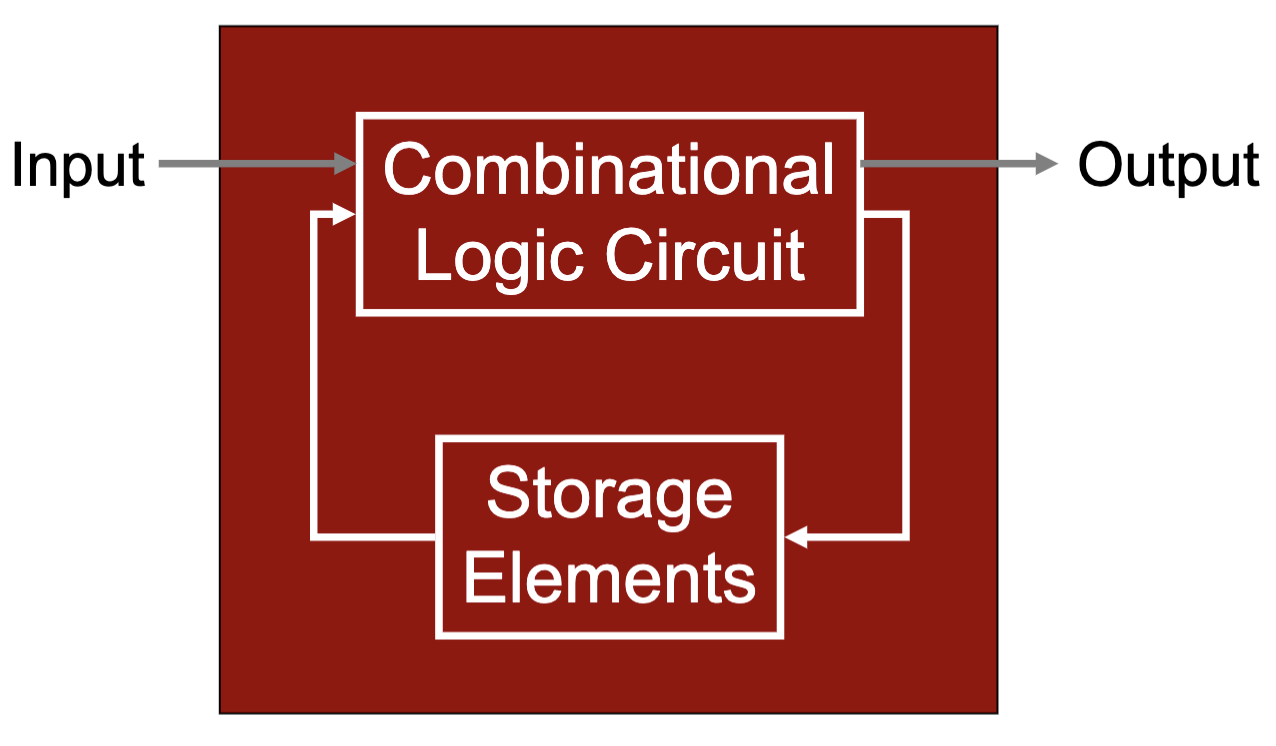
- Requires STORAGE ELEMENT
- Output depends on input plus STATE
- Analogous to an RLR combination lock
- Used to build memory & STATE MACHINE
RS Latch
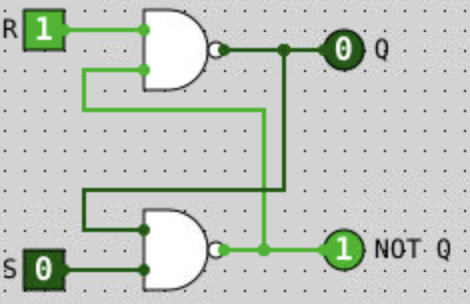
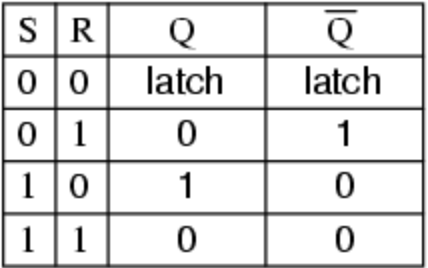
The Q and not-Q outputs are supposed to be in opposite states.
Having both S and R equal to 1 is invalid/illegal
Gated SR-Latch
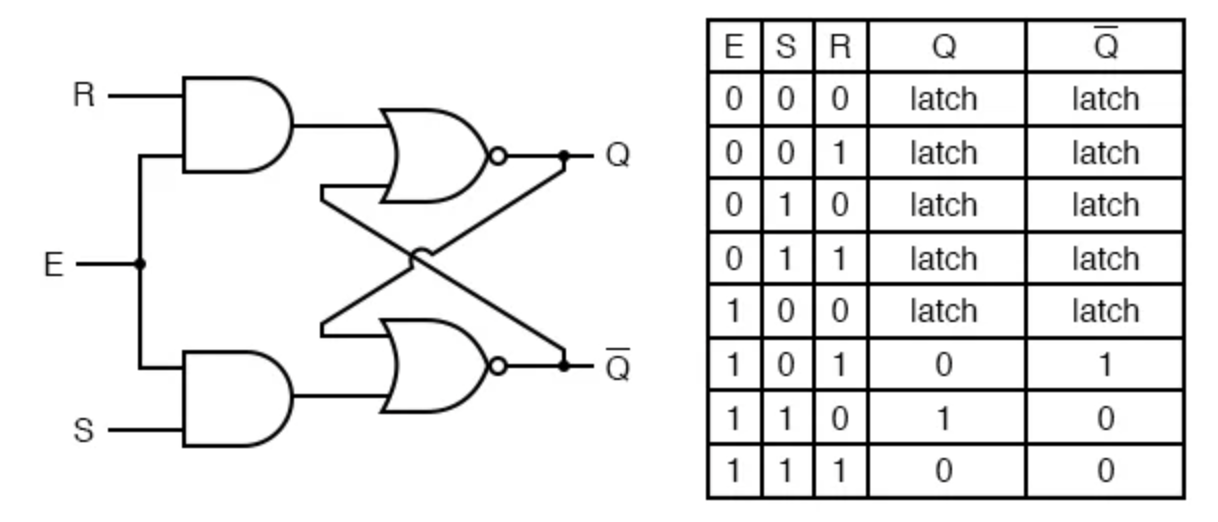
When the E=0, the outputs of the two AND gates are forced to 0, regardless of the states of either S or R. Consequently, the circuit behaves as though S and R were both 0, latching the Q and not-Q outputs in their last states.
Only when the enable input is activated will the latch respond to the S and R inputs.
Gated D-Latch
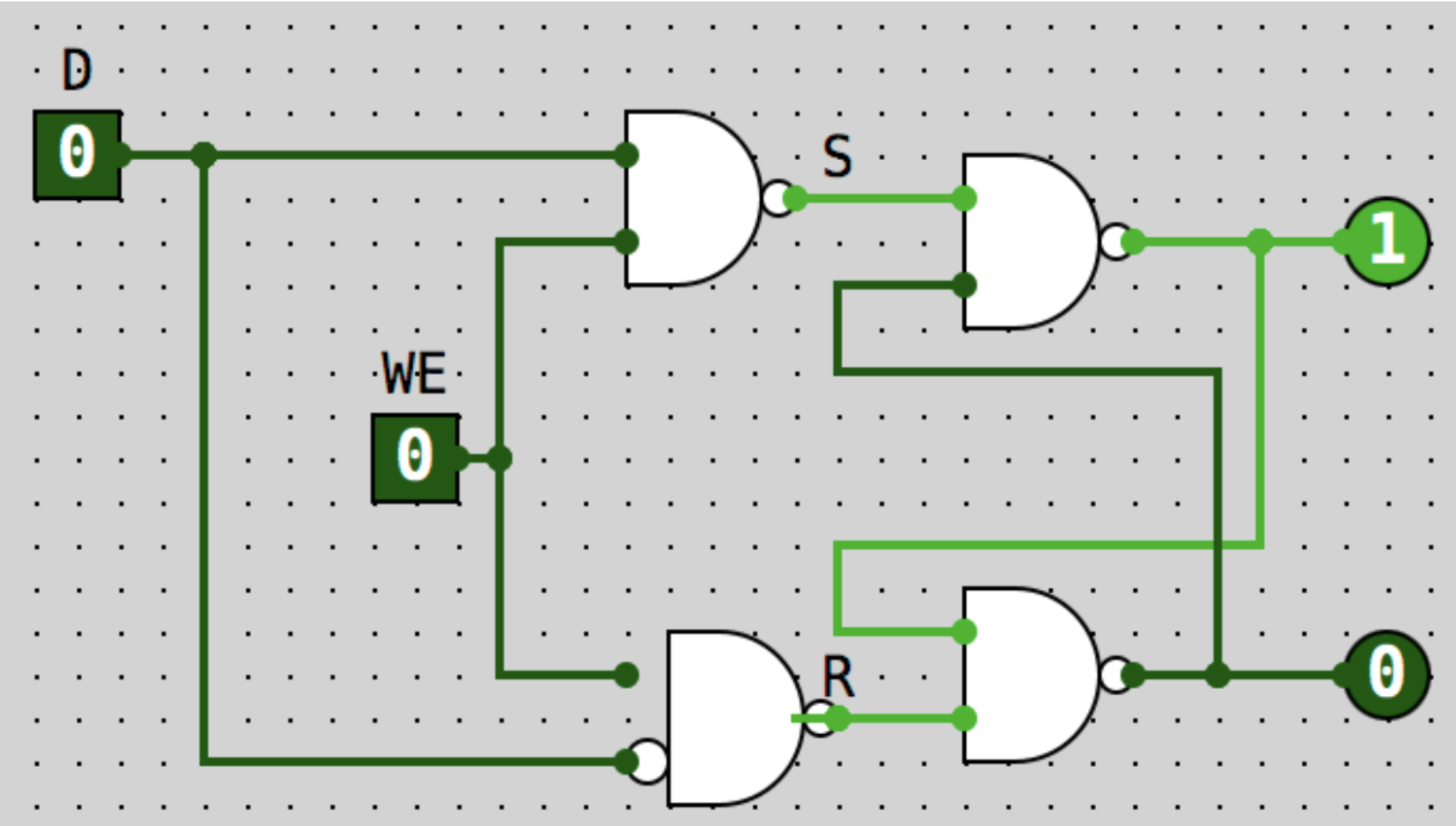
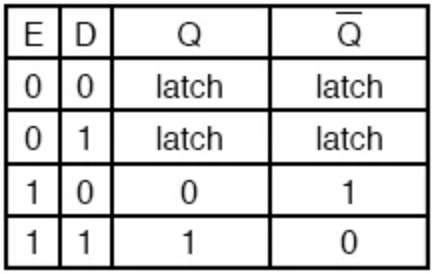
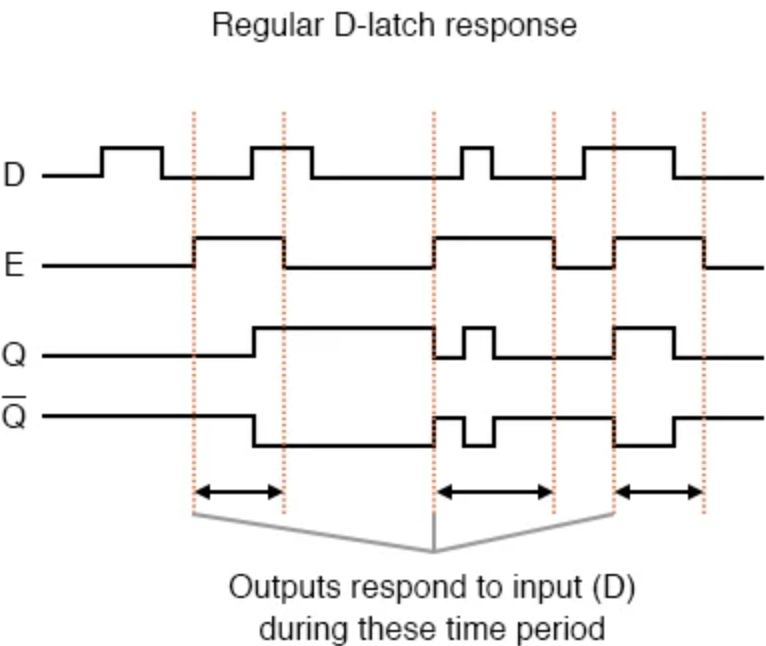
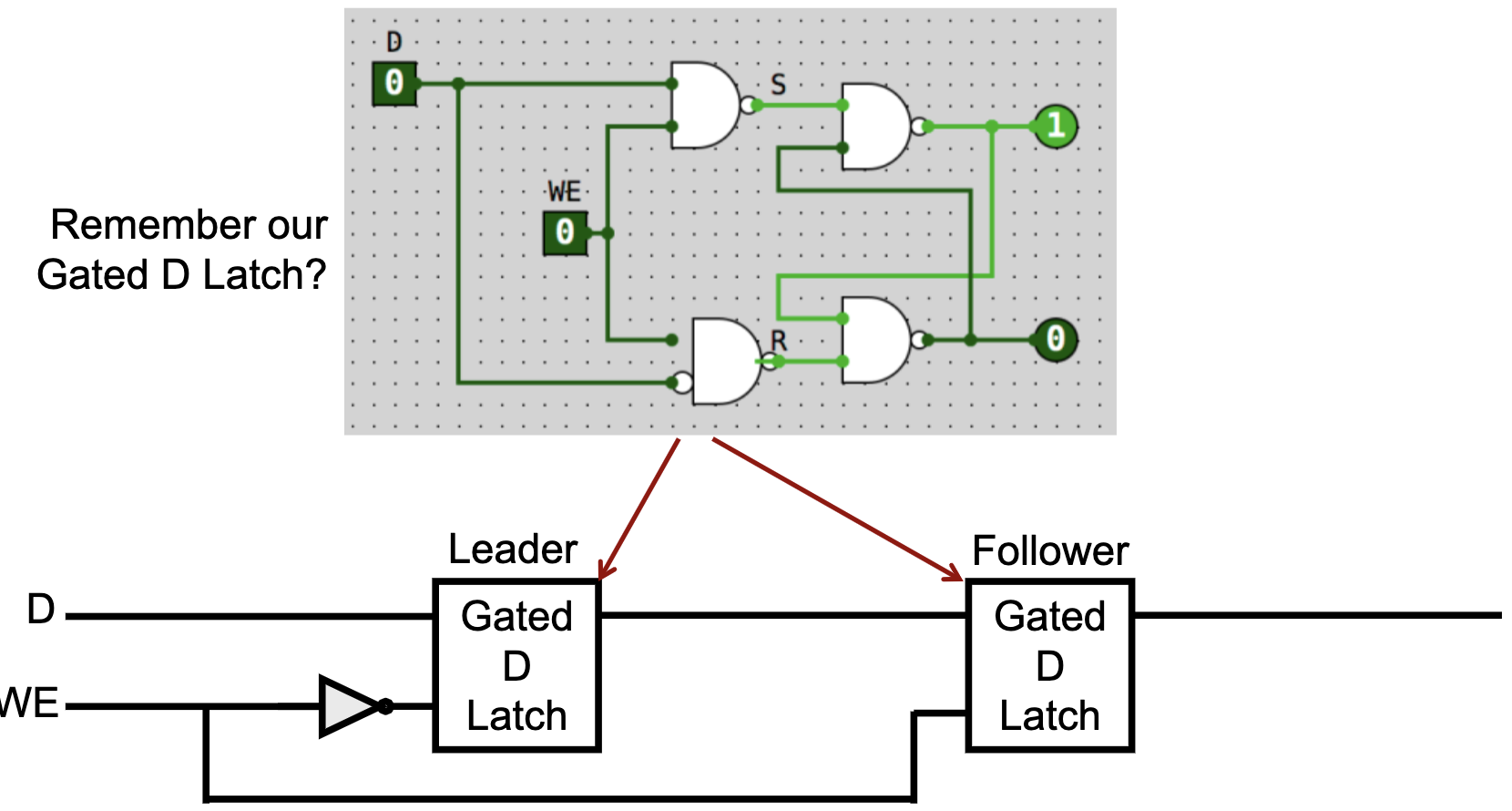
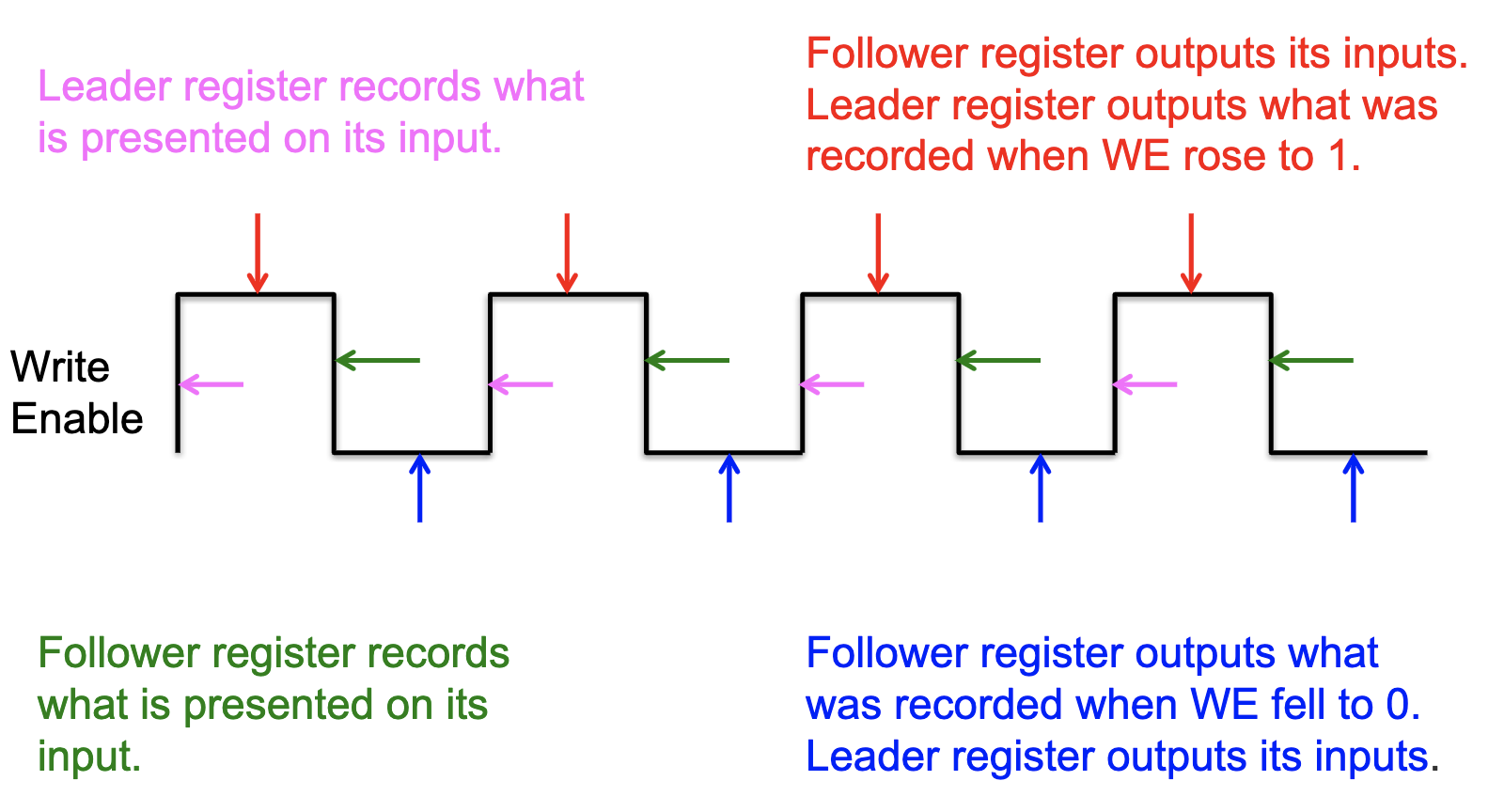
Edge-triggered(Leader-Follow) Flip Flop
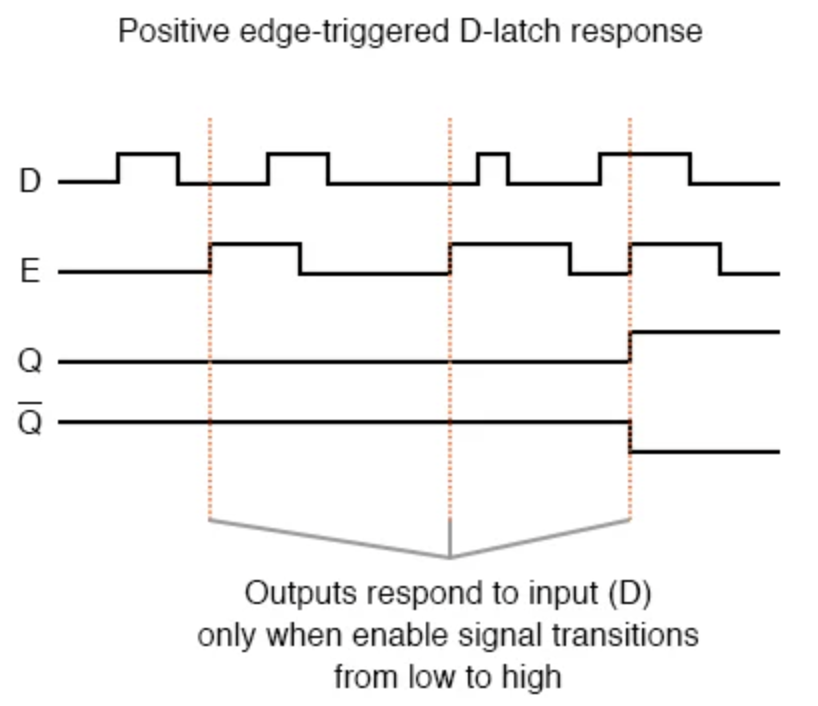
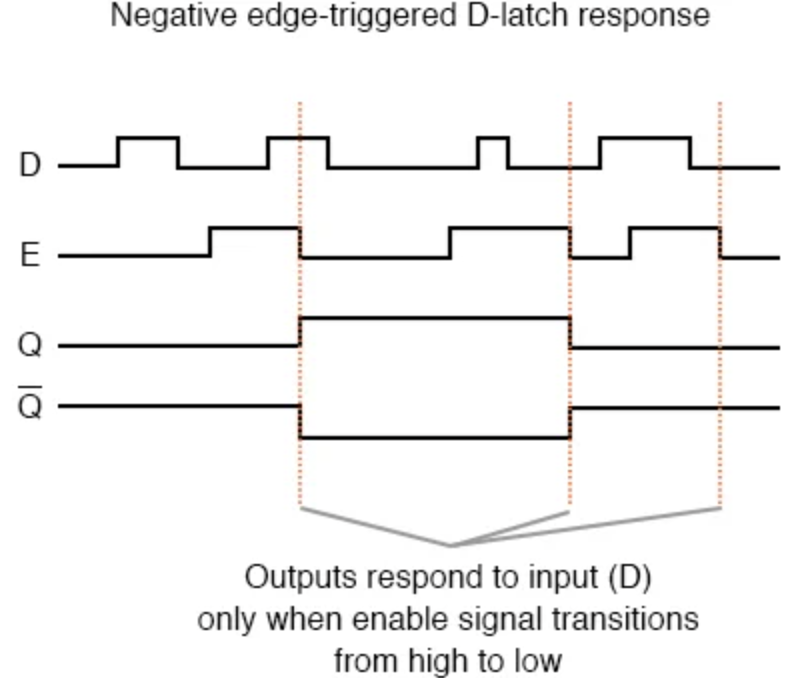
Edge-triggering: The circuit’s data inputs have control only during the time that the enable input is transitioning from one state to another. (It is desirable to limit the responsiveness of a latch circuit to a very short period of time instead of the entire duration that the enabling input is activated.)
Positive Edge-trigger
Negative Edge-trigger
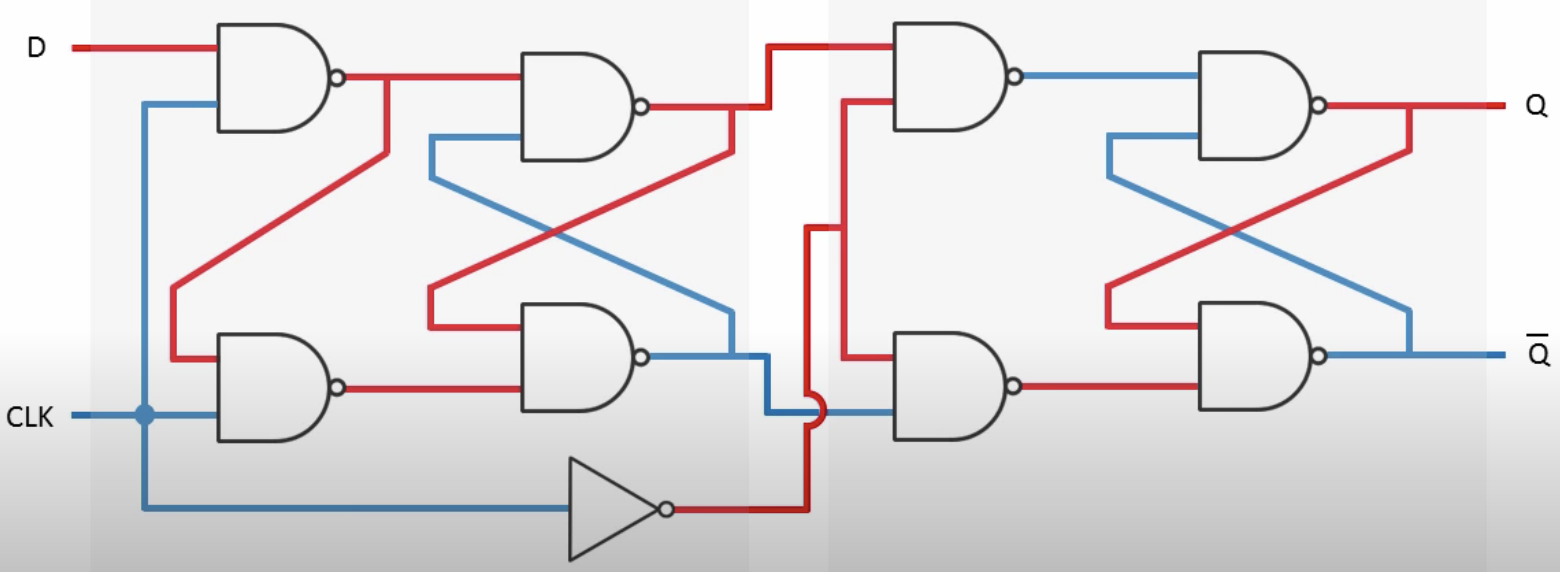
Full circuit:
Questions and Answers
- What’s the difference between sequential and combinational logic?
- Sequential: outputs of the circuit depend on both the current inputs and previous values of the inputs
- Combinational: the outputs of the circuit depend only on the current combination of inputs.
- Classify the following into examples of sequential or combinational logic:
- An XOR gate Combinational
- An RS latch Sequential
- A state machine Sequential
- An ALU Combinational
- The LC-3 Sequential
- A register Sequential
- A multiplexer Combinational
- Level-triggered vs. edge-triggered logic
- What’s the difference between level-triggered and edge-triggered logic?
- Level-triggered
- RS Latch & Gated D-Latch
- The output can only change when the enable bit is 1.
- When the enable bit is set to 0, then the output is unaffected by changes in the input
- Edge-triggered
- D Flip-Flops (Rising edge-triggered), Registers, State Machines
- Many sequential logic circuits are based on clocks instead of enable bits
- Rising-edge triggered logic : The output can only change when the clock changes from 0 to 1
- Falling-edge triggered logic : the output can only change when the clock changes from 1 to 0
- What do each look like as waveforms? (Hint: a recent lab has a waveform diagram comparing level- and edge-triggered logic.)
- Level-triggered
- What’s the difference between level-triggered and edge-triggered logic?

- What are the three fundamental sequential logic circuits we covered? Which ones are level-triggered and which ones are edge-triggered?
- RS Latch (level)
- Gated D-Latch (level)
- D Flip-Flops (edge)
- The D flip-flop we covered is a kind of leader-follower flip flop. What does this mean, and what is the purpose of the leader-follower design?
- The left D-latch updates when the clock is 0, and the right D-latch updates when it is 1.